
Understanding the Age Group Changes in US Youth Soccer
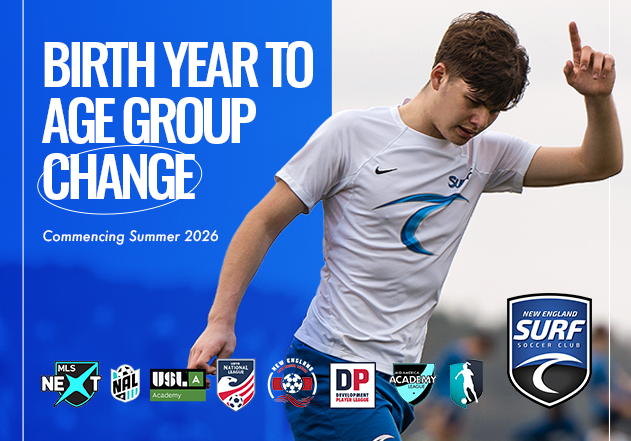
As the youth soccer landscape in the United States continues to evolve, one of the most significant changes in recent years is now underway: the transition from birth-year age groups to school-year age groups.
At New England Surf, our priority has always been clear – to provide a development-first environment while supporting our players and families through every step of their journey. With this transition now in motion, we want to ensure our community fully understands what’s happening, why it matters, and how we’ve approached it as a club.
What’s Changing – And Why
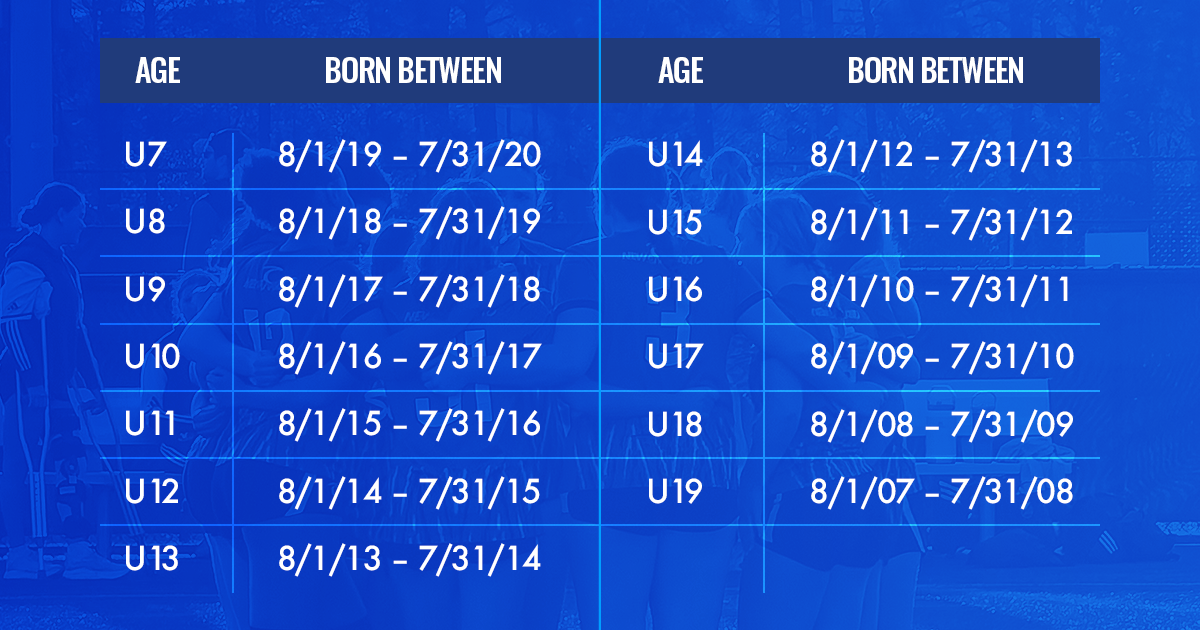
Beginning with the 2026–27 season, major governing bodies across U.S. youth soccer – including U.S. Club Soccer, US Youth Soccer, USSSA, and MLS NEXT – have aligned around a new structure based on the academic calendar (August 1 – July 31).
This means players are now grouped based on their school year rather than their birth year.
The goal behind this shift is simple:
- Align players with their classmates
- Create more consistent social and developmental environments
- Simplify long-term player pathways across different leagues and platforms
While the change is structural, the intention is to create a more natural and connected experience for players both on and off the field.
What This Means for Players and Families
For many families, the biggest question is: what happens to my player’s team?
The answer is that this is a realignment, not a promotion or demotion.
While some families may ask about players “playing up” a year, this is not a standard practice. It will only be considered in very specific situations based on individual development, and always evaluated on a case-by-case basis by our Directors of Coaching and Regional Managers.
Some players will remain with much of their existing group, while others may shift slightly depending on their school-year cohort. These adjustments are a normal part of the transition and are being handled with care by our technical staff.
Most importantly, this change does not alter your player’s development pathway – it simply reorganizes the structure around it.
How New England Surf Has Approached the Transition
Rather than waiting for the official rollout, New England Surf took a proactive approach to ensure a smooth and thoughtful transition for every player.
Over the past several months, the club has:
- Introduced school-year training environments as early as January
- Hosted multiple internal ID sessions to help players integrate into their new groups
- Aligned coaching staff across programs to evaluate players individually and build balanced rosters
- Maintained consistent communication with families throughout the process
These early steps have allowed players to build familiarity with teammates and coaches, while giving staff the time and insight needed to form strong, competitive environments ahead of the upcoming season.
A Development-First Approach
Change can bring uncertainty – especially when it impacts team environments and routines. At New England Surf, every decision throughout this process has been guided by one principle: what is best for the player.
By focusing on long-term development rather than short-term disruption, the club has positioned itself – and its players – to benefit from this shift.
As Kyle Bak, Director of Coaching for the State Boys Program, explains:
“While any structural change can feel significant at first, this is ultimately a positive step for player development. We’ve taken a proactive approach to ensure every player is supported throughout the transition – from early training sessions to detailed staff alignment – and we’re confident this will create stronger, more cohesive environments moving forward.”
On the girls side, Director of Coaching Darren Gallagher adds:
“Our priority throughout this transition has been making sure every player feels seen, supported, and placed in the right environment to succeed. This isn’t just about reorganizing teams – it’s about continuing to build meaningful development pathways where every player matters.”
Early feedback across programs has been positive, with players adapting well to their new environments and teams beginning to take shape ahead of the Fall 2026 season.
Looking Ahead to Tryouts and Team Formation
As we move into the spring and summer months, this transition continues through upcoming ID sessions and the tryout process.
These moments are not just about team selection – they are an opportunity to ensure every player is placed in the right environment to grow, compete, and succeed within the new structure.
While some teams are still taking shape under the new system, upcoming tryouts will play an important role in strengthening rosters and completing the transition ahead of the Fall 2026 season.
Not Sure Which Age Group Your Player Falls Into?
We understand that this change can create some initial confusion for families – especially when determining the correct age group under the new school-year system.
To make this easier, New England Surf has provided an Age Group Calculator on our website, allowing players and families to quickly identify the correct placement based on the new structure.
Visit our tryouts page to access the calculator and learn more: https://newenglandsurf.com/tryouts/
Moving Forward Together
At its core, this change is about alignment – with schools, with development pathways, and with the evolving landscape of the game in the United States.
And at New England Surf, it’s about guiding our community through that change with clarity, intention, and care.